
Pucked By My Hockey Rival: The Love Letter That Started a War (and Something Else Entirely)
You already know before the first episode ends that Owen is wrong. That is the specific discomfort Pucked By My Hockey Rival manufactures — placing you just outside the frame of Owen's logic, close enough to see the conclusion he is sprinting away from while he charges forward with complete conviction. It is a particular kind of viewing tension: not suspense about what will happen, but a growing need to watch a character arrive at the thing he has been systematically avoiding.
That psychological trap is not an accident of plotting. It is the drama's central argument, and it is worth making directly: Pucked By My Hockey Rival succeeds not because its misunderstanding premise is structurally original, but because the misunderstanding itself is psychologically honest. Owen doesn't misread David's love letter out of carelessness. He misreads it because misreading it is the only version his mind will allow.
The Letter, the Fight, and What the Ice Actually Reveals
When Owen finds the letter bearing his rare last name, the obvious interpretation — that the letter might be addressed to him — never registers as a possibility. His mind reroutes instantly: David must be writing to Owen's sister. It is the kind of cognitive swerve that would pass unremarked in a lesser drama. Here, it functions as a compressed character portrait: Owen is someone who trusts what can be proven, what can be ranked and scored and named. The interior ambiguity the letter might otherwise force him to examine is simply not a category he has built for himself.
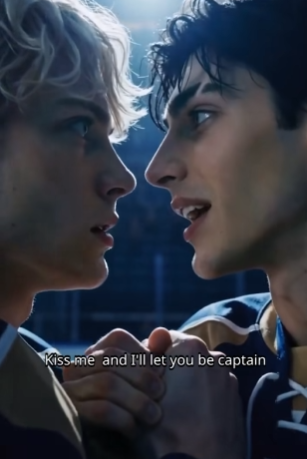
The fight between the two rivals carries the right dramatic weight because both men are fighting about different things entirely. Owen believes he is defending his family. David — who knows exactly what he wrote and who he meant it for — is fighting something else. The coach's intervention, imposing a forced-proximity arrangement to prevent suspension, is the kind of plot mechanism that could easily read as convenient. In this drama's context, it reads less like a contrivance and more like circumstance refusing to let either man off the hook.
What the structured coexistence delivers is time — time for the rivalry to lose its clean edges, for the competitive armor both players wear on and off the ice to develop pressure cracks. The sport itself is not decoration here. Hockey provides both characters with a language for intensity they already share: full-body commitment, aggression, the refusal to yield ground. The drama understands that the ice rink is not separate from the emotional story. It is where both men already know how to want something badly.
Owen: The Psychological Architecture of a Self-Deceiver
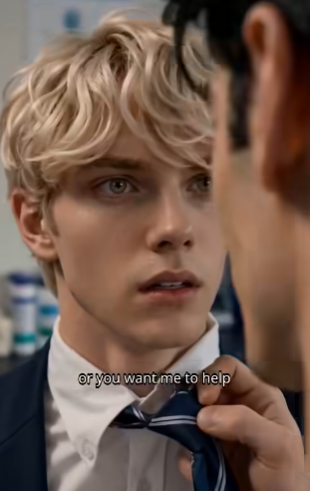
Owen's driving fear, when traced through the plot mechanics, is the fear of misidentifying his own interior. He has spent considerable effort constructing a self-image built on legible, measurable things — athletic rank, loyalty to family, a competitive identity sharp enough to cut with. Abstract emotional uncertainty sits outside the vocabulary he has built for himself, and the drama is careful not to play his resistance as stupidity.
Every confrontation Owen initiates reads, in retrospect, as a character working very hard not to arrive at an obvious destination. He translates every moment of David's proximity into hostility because hostility is a category he can act on. The dramatic question is never whether he will eventually understand — it is how far he will travel to avoid understanding it, and what it will cost him when the route finally runs out.
David: The Irony of the Man Who Already Knows
David carries the opposite problem. He wrote the letter. He knows who it was for. And the drama places him in a position of structured helplessness — the person who has already been honest with himself, now forced to watch the subject of that honesty perform increasingly elaborate self-deception at close range.
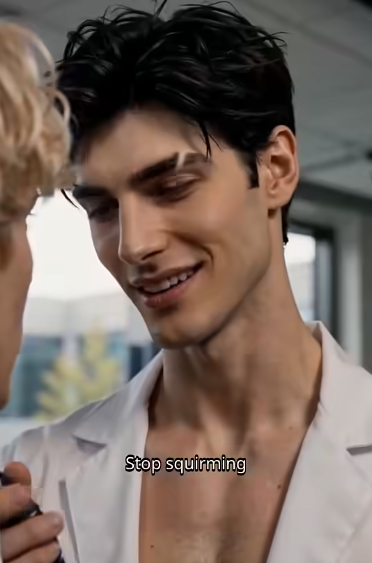
The irony that shapes David's arc is specific and somewhat brutal: what he fears — that Owen's eventual understanding of the letter's real meaning will destroy whatever uneasy proximity they have built — is precisely what the audience can already see is wrong. David's fear of exposure has become its own blind spot. He cannot see that the disproportionate violence of Owen's initial reaction tells its own story. The signal he hoped for has been transmitted. He is simply too close to the static to receive it.
The Case Against This Setup — and Why It Loses
Forced proximity as a romantic catalyst is among the most rehearsed tools in the short drama format. An audience scanning for structural novelty in the premise will find the architecture recognizable: the coach-imposed truce, the competitive tension softening incrementally, the misunderstanding that must be cleared before anything honest can begin. None of these moves are invented here.

What prevents the formula from collapsing under the weight of its own familiarity is the psychological specificity of the misunderstanding itself. This is not a generic mix-up born of bad timing. It is rooted in who Owen is, what he fears, and what he will and will not allow himself to see. That level of character-grounded causality is what separates a recycled plot from a functional one. The setup is familiar; the reason it works is not.
Why the Tension Holds All the Way Through
Short dramaas a format demands efficient emotional escalation — the story has no room for scenes that do not move something. Pucked By My Hockey Rival operates with an understanding of this compression requirement. The inciting structure moves quickly without sacrificing the character logic that makes the escalation feel earned. Letter, fight, forced proximity: each step follows from the one before it without needing external pressure to push it forward.
The unresolved misunderstanding that carries the drama's middle section functions not as a frustrating delay but as genuine sustained pressure. Viewers who have already clocked what Owen refuses to acknowledge are watching every shared scene with a double frame: the scene as Owen reads it, and the scene as it actually is. That gap — between what a character perceives and what the audience knows — is precisely where Pucked By My Hockey Rival lives. It stays there longer than you expect, and it earns every minute of the wait.
Where to Watch
Platform: Dramawave
URL: dramawave (visit the platform directly and search the title)
Access: Dramawave operates as a short drama streaming app; episode access may vary between free preview and subscription tiers. Check the platform for current availability in your region.
Related Recommendations