Chinese AI Vertical Dramas Break Into Cannes as the Industry Shifts From Mass Production to Prestige Storytellin
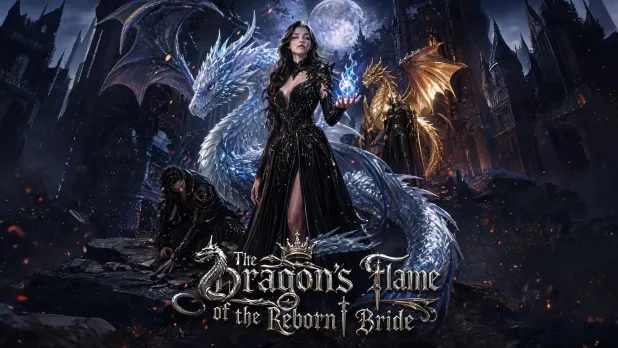
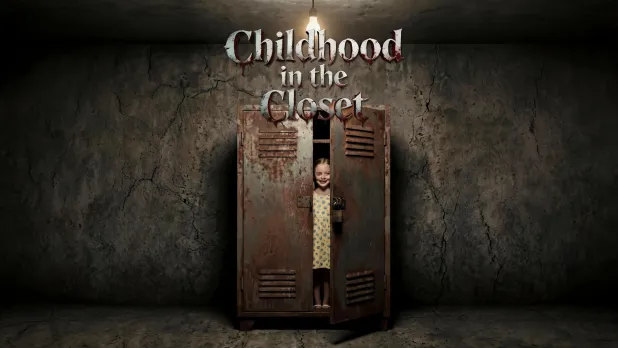
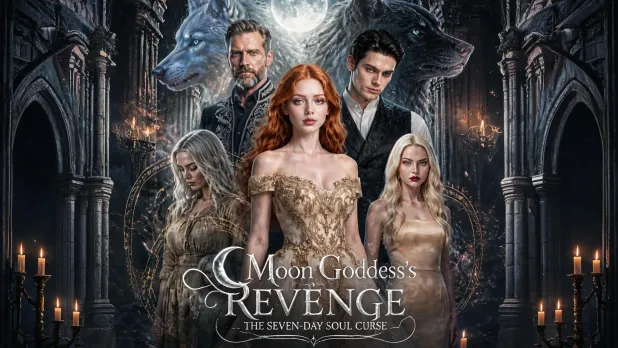
Two fully AI-generated vertical series from China have been selected for Cannes’ Fantastic Pavilion, signaling growing international recognition for AI-native filmmaking and the maturation of the short drama industry.
As artificial intelligence continues reshaping global entertainment pipelines, a milestone for AI-generated storytelling may be unfolding at the Cannes Film Festival.
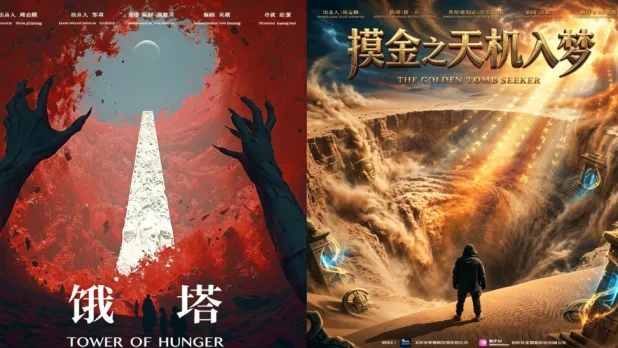
Two fully AI-produced vertical drama series from Chinese studio Waterdrop Intelligence have been selected for the official screening lineup of the Fantastic Pavilion at the 79th Cannes International Film Festival. The projects — The Golden Tomb Seeker and Series Tower — are among only 21 vertical-format works selected worldwide and the only two entries from Chinese teams in the category.
While AI-generated shorts have appeared at niche festivals before, the Cannes selection represents a notable moment for the emerging AI drama industry: a mainstream international film ecosystem is beginning to recognize AI-native narrative works not merely as technical demonstrations, but as legitimate storytelling formats.
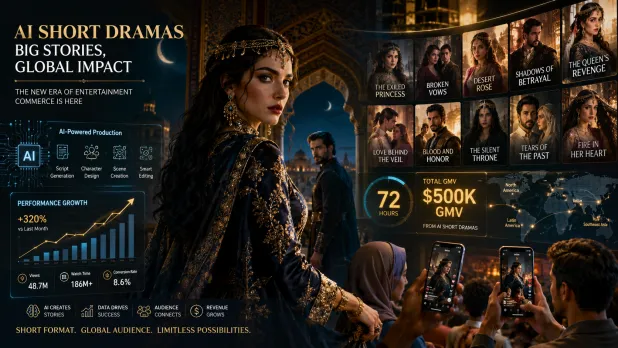
The development comes at a time when the AI short drama market is undergoing rapid transformation. After months of explosive growth fueled by generative video tools, the sector has also faced increasing criticism over low-quality “AI content farms,” repetitive narratives, and platform crackdowns on spam-like productions. Against that backdrop, the Cannes recognition suggests a potential shift toward premium, IP-driven AI entertainment.
From Viral AI Content to Curated Narrative Production
Both selected projects were produced by Hangzhou-based company Waterdrop Intelligence, which operates AI entertainment labels focused on genre storytelling.
The Golden Tomb Seeker draws from the universe of Ghost Blows Out the Light, one of China’s most influential supernatural adventure franchises. Created by bestselling author Zhang Muye — better known by his pen name Tianxia Bachang — the franchise combines tomb raiding, folklore, mysticism, and historical fantasy, and has previously spawned films, television adaptations, and international publications.
The AI vertical series was co-developed by Tianxia Bachang and screenwriter Gao Yang, while veteran editor Zhang Yifan, known for collaborations with filmmaker Jiang Wen on titles including Let the Bullets Fly and The Sun Also Rises, served as supervising editor.
The second project, Series Tower, adapts a science-fiction novel by Pan Haitian, one of the founding writers behind Jiuzhou, a sprawling Chinese fantasy universe often compared to shared-world franchises in Western speculative fiction. The screenplay was co-written with award-winning sci-fi writer Wu Shuang.
Industry observers say the projects stand out because they rely on established intellectual property and experienced creative teams rather than purely AI-generated spectacle.
That distinction matters.
Over the past year, the global vertical drama market — especially mobile-first serialized content designed for portrait-oriented viewing — has become one of the fastest-growing segments in digital entertainment. China has emerged as a dominant force in the category, with short drama apps and platforms generating billions of views and attracting significant investor interest.
At the same time, generative AI tools have dramatically lowered production barriers. In early 2026, several Chinese AI studios publicly claimed they could produce hundreds or even thousands of AI-generated episodes per month. But rapid scaling also triggered backlash as audiences and platforms became saturated with formulaic content.
The Cannes selection appears to reflect a growing appetite for higher-quality AI storytelling rather than industrial-scale output.
Why Cannes Is Paying Attention to AI Vertical Content
The Fantastic Pavilion’s inclusion of vertical-format storytelling aligns with broader shifts across the international festival circuit.
Film festivals including Sundance, Tribeca, Venice, and Runway’s AI Film Festival have increasingly showcased AI-assisted productions in recent years. Cannes itself has gradually expanded its interest in emerging storytelling formats, immersive media, and creator technologies.
What makes the Waterdrop projects notable is not simply their use of AI, but their attempt to merge AI production pipelines with recognizable cinematic grammar, franchise-level worldbuilding, and professional storytelling structures.
According to the producers, both series were developed with long-term IP expansion in mind rather than short-term traffic generation.
“The content industry will ultimately still be driven by quality and storytelling,” Waterdrop Intelligence co-founder Zhou Zhipeng said in the original interview. “The question is whether you chase short-term platform dividends or prepare early for the premium phase of AI content.”
That philosophy contrasts sharply with the hyper-accelerated production culture that has dominated much of the AI video market over the past year.
While many AI studios optimized for speed and volume, Waterdrop reportedly limited its production slate and extended development cycles. The company said The Golden Tomb Seeker and Series Tower each required nearly three months of production — significantly longer than the industry’s typical rapid-turnaround model.
The studio also claims to be building a larger interconnected franchise universe around The Golden Tomb Seeker, with nearly 30 projects in development.
The strategy resembles the broader evolution of streaming entertainment itself: intellectual property ecosystems increasingly matter more than standalone content.
AI as Production Infrastructure, Not Replacement
One of the more revealing aspects of the projects is how heavily they still depend on traditional creative labor.
Despite the “fully AI-generated” label, writers, editors, directors, and worldbuilding specialists remain central to the workflow.
According to the company, AI is primarily used to streamline execution layers — including visual generation, asset consistency, scene visualization, and iterative production — rather than replacing narrative development itself.
The company’s proprietary platform, Chushou AI, reportedly supports a full-stack workflow covering script development, visual design, VFX generation, and AI-assisted adaptation. The system also uses agent-based analysis tools to evaluate source IPs using engagement metrics such as readership, completion rates, and user retention before human editorial teams conduct deeper review.
But the producers repeatedly emphasize that human creators remain responsible for tone, pacing, emotional continuity, and aesthetic coherence.
That distinction highlights one of the most persistent challenges in AI filmmaking today: consistency.
Many AI-generated videos still struggle with character continuity, tonal stability, visual coherence, and emotional rhythm — issues that become even more visible in genres like science fiction and fantasy, where worldbuilding is essential.
For serialized storytelling, the challenge becomes exponentially harder.
Tianxia Bachang reportedly said that what interests him most about AI filmmaking is not isolated image generation, but whether characters and worlds can maintain long-term narrative continuity across multiple productions.
In other words, the bottleneck is shifting from generation to control.
That shift may define the next phase of the AI entertainment industry.
The Rise of AI-Native Entertainment Ecosystems
The broader significance of the Cannes selection lies in what it reveals about the future structure of AI media companies.
Rather than positioning itself as a pure software provider, Waterdrop appears to be building a vertically integrated AI entertainment ecosystem combining:
● IP acquisition
● AI production infrastructure
● creator collaboration
● asset management
● distribution
● audience analytics
● iterative content optimization
The company has also reportedly launched licensed human likeness libraries amid growing concerns around digital identity rights and unauthorized AI-generated faces.
This reflects a larger industry trend: the commercialization layer around AI content may ultimately prove more valuable than the generation models themselves.
As generative video technology rapidly commoditizes, competitive advantages are increasingly shifting toward:
● proprietary IP
● creator relationships
● workflow optimization
● audience targeting
● franchise management
● distribution ecosystems
That mirrors the trajectory of earlier platform economies in streaming, gaming, and social media.
“The lower bound is determined by the model,” Zhou reportedly said. “The upper bound is determined by creators.”
A Turning Point for AI Short Dramas?
Whether AI-generated vertical dramas can evolve into a sustainable premium entertainment category remains uncertain.
Audience skepticism around AI content remains high in many markets, and legal questions surrounding copyright, likeness rights, and training data continue to intensify globally.
Still, the Cannes recognition suggests the conversation around AI filmmaking is becoming more nuanced.
For much of the past two years, AI video has largely been evaluated through the lens of technological novelty. The emerging question now is whether AI can support long-form emotional storytelling, franchise continuity, and commercially viable entertainment ecosystems.
The Chinese short drama industry may become one of the first large-scale testing grounds for that transition.
Unlike traditional film and television production, vertical dramas are already optimized for:
● mobile-native viewing
● rapid iteration
● data-driven storytelling
● serialized engagement
● algorithmic distribution
Those characteristics make the format particularly compatible with AI-assisted production.
If premium AI-native storytelling succeeds anywhere first, many analysts believe it could emerge from the convergence of short-form mobile entertainment and generative media infrastructure.
The Cannes selection does not prove that AI filmmaking has fully arrived. But it may mark the moment when the industry stopped viewing AI video merely as synthetic content — and started considering it a legitimate production category within global entertainment.
Key Industry Takeaways
● Cannes’ Fantastic Pavilion has selected two fully AI-generated Chinese vertical dramas for official screening.
● The projects reflect a shift from mass-produced AI content toward premium, IP-driven storytelling.
● Established writers and film professionals remain critical to successful AI productions.
● AI filmmaking is evolving from “generation” to “control” and production consistency.
● Vertical dramas may become one of the first commercially scalable formats for AI-native entertainment.
● AI media companies are increasingly positioning themselves as ecosystem builders rather than pure tool providers.
Related Recommendations