AI Beast-Romance Drama Becomes Overseas Breakout Hit as Vertical Entertainment Enters Formula-Driven Industrial Era
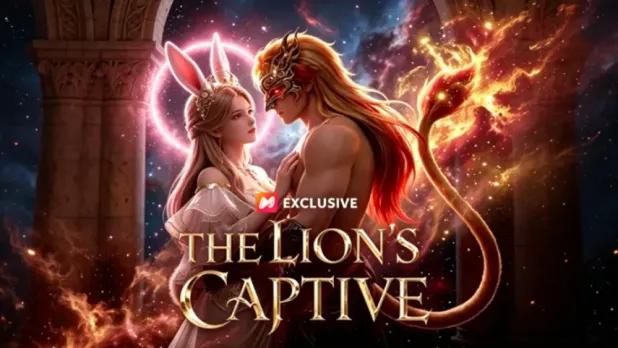
The Lion’s Captive, an AI-generated fantasy romance featuring a lion prince and rabbit princess, is emerging as one of the strongest-performing AI short dramas in the overseas market — signaling a new phase of scalable, emotionally engineered storytelling.
The overseas AI short drama market may have found its latest breakout genre: beast-romance fantasy.
In recent months, AI-generated vertical dramas have rapidly evolved from experimental curiosities into highly optimized entertainment products built around repeatable emotional formulas, niche fantasy worldbuilding, and algorithm-driven audience retention. At the center of that shift is The Lion’s Captive, a fantasy romance series released on mobile-first platform NetShort that has quickly become one of the most talked-about AI dramas in the international short-form market.
The series blends dominant-romance tropes, forbidden desire, anthropomorphic fantasy characters, and high-intensity emotional escalation into a format engineered for binge-driven mobile viewing. More importantly, its success reflects a larger industrial transition taking place inside the AI entertainment ecosystem: the rise of scalable “micro-innovation” storytelling.

According to platform data, The Lion’s Captive launched in late April and rapidly climbed engagement rankings among newly released AI dramas. The English-language version reportedly accumulated more than 1.4 million saves and over 150,000 likes within weeks of release, significantly outperforming many competing AI-generated romance series released during the same period.
The title also became one of the platform’s most aggressively promoted AI productions, supported by large-scale creative advertising deployment across international markets.
But beyond metrics, the real significance lies in what the series reveals about the current state of AI-native storytelling.
The Rise of AI Beast-Romance Fantasy
Like many successful overseas vertical dramas, The Lion’s Captive is structurally familiar.
At its core, the series follows one of the most dominant formulas in female-oriented serialized entertainment:
● a powerful male lead,
● a vulnerable heroine,
● accidental intimacy,
● hidden identity,
● social punishment,
● and eventual emotional rescue.
What differentiates the project is not the emotional architecture itself, but the packaging.
Instead of using contemporary CEOs, vampires, or werewolves — all heavily saturated categories in vertical drama platforms — the series relocates the narrative into an anthropomorphic fantasy kingdom populated by beast-like royal bloodlines.
The male lead is a lion prince feared as a ruthless warrior.
The female lead is a rabbit princess trapped in a politically hostile family environment.That predator-prey dynamic becomes the series’ central hook.
In natural ecosystems, lions and rabbits occupy opposite ends of the food chain. The show transforms that biological imbalance into romantic tension, creating a built-in framework for dominance, vulnerability, forbidden attraction, and emotional dependency.
The result is a fantasy pairing that feels both visually distinctive and instantly understandable to global audiences already familiar with paranormal romance and “alpha male” storytelling structures.
Thematically, the series borrows heavily from tropes long popular in romance publishing and serialized digital fiction:
● forced marriage,
● mistaken identity,
● pregnancy scandal,
● purity politics,
● aristocratic power structures,
● and public humiliation narratives.
Yet the AI-generated fantasy aesthetic gives those familiar structures a refreshed commercial identity.
In many ways, beast-romance AI dramas appear to be the next evolutionary step after the explosive growth of werewolf-themed vertical series earlier this year.
AI Drama’s New Competitive Advantage: Emotional Engineering
What makes The Lion’s Captive particularly notable is the sophistication of its emotional pacing.
The series opens with immediate narrative escalation: the heroine is framed by her stepsister, loses her virginity during an anonymous encounter inside a forest cabin, and later discovers she is pregnant — all within the opening progression of the story.
Complicating matters further, the fictional kingdom enforces a deadly social rule: a bride discovered not to be a virgin on her wedding night can be executed.
That premise instantly establishes survival stakes.
From there, the story continuously layers emotional pressure:
● family betrayal,
● forced marriage,
● hidden pregnancy,
● public shame,
● identity concealment,
● and looming execution.
Each plot point intensifies the heroine’s vulnerability while delaying emotional resolution between the leads.
Importantly, the audience knows the identities of both lovers long before the characters themselves do. This creates a dramatic irony structure commonly used in serialized romance fiction: viewers continue watching not to discover what happened, but to experience when the emotional recognition finally occurs.
The climax reportedly arrives during an arena execution sequence in which the heroine’s unborn child manifests lion bloodline powers, triggering the male lead’s realization that she was the woman from the mysterious cabin encounter.
The pacing strategy reflects one of the defining characteristics of modern vertical drama storytelling: emotional density optimization.
Unlike traditional television pacing, mobile-first short dramas are designed around near-constant emotional stimulation. Every episode or segment must deliver:
● revelation,
● humiliation,
● reversal,
● romantic payoff,
● or survival tension.
AI production pipelines are increasingly accelerating that structure.
From Greek Mythology to Beast Kingdoms
The success of The Lion’s Captive also reflects the rapid genre evolution happening inside the overseas AI drama market.
Earlier waves of AI-generated vertical dramas largely focused on Western fantasy aesthetics inspired by:
● Greek mythology,
● vampire fiction,
● royal fantasy,
● and werewolf romance.
Those genres proved commercially valuable because AI image-generation systems perform especially well with stylized fantasy environments:
● castles,
● armor,
● magical effects,
● supernatural creatures,
● and cinematic landscapes.
Beast-romance narratives build naturally on that foundation while offering stronger visual differentiation.
At the same time, these fantasy settings help AI productions avoid some of the uncanny-valley limitations that still affect hyper-realistic human storytelling. Stylized fantasy worlds can tolerate slight inconsistencies in movement, facial rendering, or environmental continuity more easily than realistic drama settings.
That technical compatibility may partially explain why fantasy and supernatural genres are dominating the AI short drama market globally.
But beneath the changing aesthetics, the emotional core remains remarkably stable.
Whether the setting involves Greek gods, werewolves, mafia bosses, or beast kingdoms, the overwhelming majority of successful overseas AI dramas still revolve around female-oriented emotional fantasy narratives.
The format changes.
The emotional engine does not.
The Industrialization of “Micro-Innovation”
Perhaps the most important takeaway from The Lion’s Captive is what it reveals about the emerging industrial logic behind AI entertainment.
The overseas AI drama boom is increasingly moving toward a model that could be described as “formula plus micro-innovation.”
Rather than reinventing storytelling from scratch, studios are taking already validated emotional structures and applying low-cost modular modifications:
● changing the world setting,
● adjusting character species,
● introducing new power hierarchies,
● or combining genre aesthetics in novel ways.
In this case, the innovation was relatively simple:
replace traditional werewolf romance with a lion-rabbit predator dynamic.That single conceptual adjustment generated:
● stronger visual branding,
● immediate thematic contrast,
● meme potential,
● and differentiated audience curiosity.
Crucially, AI production tools dramatically reduce the cost of testing those variations.
In traditional television production, building a fantasy beast kingdom with large-scale visual effects would require substantial budgets, long timelines, and complex post-production pipelines. AI workflows allow creators to prototype and scale such settings far more quickly.
That shift is enabling a new content production paradigm:
high-volume emotional experimentation built on proven commercial frameworks.
The most successful studios are no longer simply generating AI visuals.
They are systematizing emotional formulas.
Why the Female-Oriented Market Still Dominates
One of the clearest patterns emerging from the overseas AI short drama ecosystem is that female-oriented romance remains the category’s commercial backbone.
Even as genres evolve from mythology to werewolves to beast kingdoms, most breakout AI series still center on:
● emotional dependency,
● romantic hierarchy,
● betrayal,
● redemption,
● possessive love,
● and survival-based intimacy.
The consistency is not accidental.
Female-targeted serialized storytelling has historically performed exceptionally well in:
● web novels,
● romance publishing,
● fan fiction ecosystems,
● streaming melodramas,
● and mobile reading platforms.
AI short dramas are now inheriting that infrastructure.
What changes in the AI era is not necessarily the narrative psychology, but the scalability of production and experimentation.
Studios can now iterate fantasy concepts at unprecedented speed while maintaining the same emotional architecture that audiences already understand and repeatedly consume.
The Future of AI Entertainment May Be Modular
The success of projects like The Lion’s Captive suggests the AI entertainment industry is entering a more mature industrial phase.
The first wave of AI video focused primarily on technical novelty.
The second wave emphasized scale and output volume.The emerging third phase appears increasingly focused on:
● retention optimization,
● modular franchise building,
● emotional engineering,
● and scalable content differentiation.
In that environment, the winners may not be the studios with the best raw generation models, but the ones with the strongest understanding of serialized audience psychology.
AI tools are making production cheaper.
But audience attention remains expensive.And in the rapidly evolving world of vertical entertainment, emotional precision may become the industry’s most valuable asset.
Key Industry Takeaways
● The Lion’s Captive is emerging as one of the strongest-performing AI-generated vertical dramas in overseas markets.
● Beast-romance fantasy is becoming a new breakout AI drama category following the rise of werewolf-themed content.
● AI short dramas are increasingly built around “formula plus micro-innovation” production strategies.
● Female-oriented emotional storytelling continues to dominate the overseas vertical drama ecosystem.
● Fantasy settings remain highly compatible with current AI video-generation capabilities.
● The AI entertainment market is shifting from novelty-driven experimentation toward industrialized emotional optimization.
Related Recommendations
Popular Articles