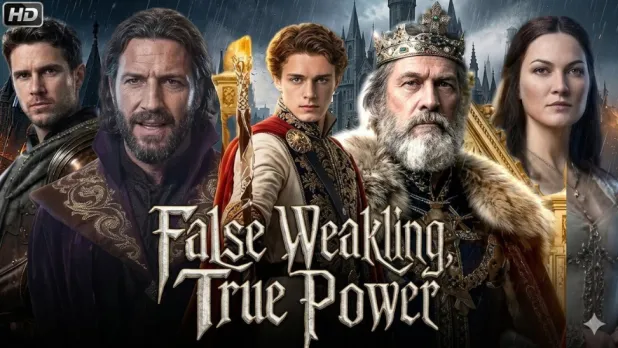
False Weakling, True Power Proves the Most Dangerous Man in the Room Is the One Nobody Watches
Here is what this short drama actually is: a study in how power becomes most effective the moment it stops performing itself.
That thesis arrives early. A Northern rogue tears through the Aurellian capital — reckless, loud, demonstrating his strength to anyone watching. Then a single spell reduces him to nothing. No warning, no speech, no visible caster. Just absence where a man used to be. The empire's First Mage, Kael, spends the next stretch of the story looking for someone formidable — scanning the high nobility for traces of power that would match what he witnessed. He doesn't think to check Lucien Valewyn. Nobody does. Lucien is the empire's standing joke: profligate, idle, the kind of man whose stepfather Duke Garrick punishes publicly just to remind the court that some failures are hereditary.
The reveal — that Lucien is the hidden protector — lands with the force it does precisely because the drama has spent real time making you believe the lie too.
The Architecture of the Underdog
False Weakling, True Power is structurally a revenge fantasy, but it earns that label by treating revenge not as a destination but as a psychological condition Lucien lives inside every day. The drama's central dramatic mechanism is the gap between performance and reality: every scene in the Valewyn estate where Garrick degrades Lucien, every moment Roland and Morgana reinforce the "worthless nobody" narrative, functions as pressure building inside a sealed container. The audience knows the container will break. The series understands that the pleasure isn't the explosion — it's watching Lucien choose, again and again, not to let it happen yet.
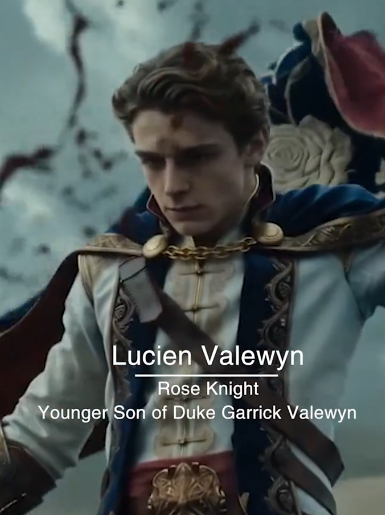
This is tension engineered through restraint. When Kael investigates and eventually confronts Lucien directly, the scene inverts every expectation the tournament framing has set up. The strongest mage in the empire doesn't overpower the First Mage theatrically. He simply demonstrates enough that Kael understands he's been looking in completely the wrong direction. The reversal works because it's quiet.
Kael: The Function of a Man Who's Wrong
Kael's shock upon discovering that Lucien is the true master is described as a turning point — the moment the drama's central irony fully clicks into place. But Kael functions as more than the story's investigator. He serves as the audience's proxy inside the empire's power structure — intelligent, genuinely capable, and nonetheless completely wrong about where ability lives. His role is a dramatic mirror: if even the First Mage can miss what's in front of him, the drama asks, what does that say about the hierarchies that structure this world?
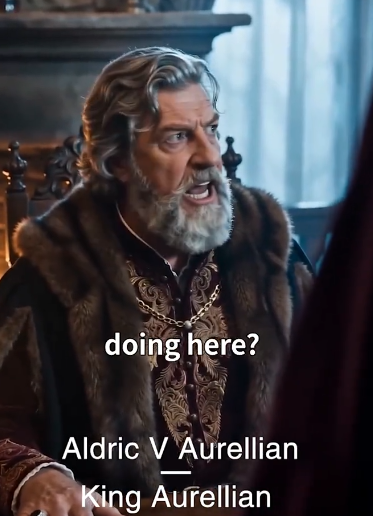
There's something quietly corrosive in how False Weakling, True Power uses Kael. He isn't villainous. He's credentialed. He holds his position because the empire's system of recognition awarded it to him. And the drama's argument, delivered through Lucien's concealment, is that systems of recognition are exactly the wrong tools for finding the most dangerous person in any room.
Princess Isolde and the Tournament's Real Stakes
The martial tournament — ostensibly a contest for Isolde's hand — functions less as a romantic mechanism than as a political theatre the drama keeps deliberately destabilizing. Isolde initially sees Lucien as an embarrassment; the moment she connects him to the legendary hidden protector the empire has been searching for lands as a genuine shock, with the irony cutting hard — she tried to move away from him, only to discover he was the figure she most admired.
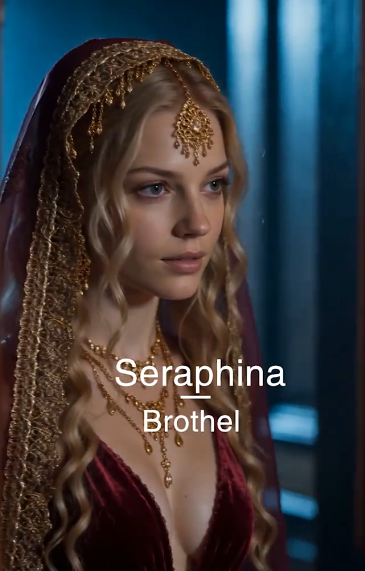
The relationship dynamic between Isolde and Lucien is interesting because the drama resists collapsing it into standard romantic inevitability. Lucien openly admits that his goals are revenge and political power, not emotional attachment — a confession that shifts the central question from "Will they fall in love?" to something sharper: whether someone whose entire survival strategy requires hiding themselves can ever allow real closeness. That's a more unsettling question than most fantasy dramas are willing to sit with, and it gives the series genuine forward momentum beyond the tournament arc.
The Magic System as Character Expression
The visual design of the spellwork — golden circles, runes appearing in the sky, a CGI bear constructed from lightning — has drawn strong notice from viewers, with the production quality described as unexpectedly high for the short drama format. Every spell cast is noted to feel impactful rather than decorative.
This matters beyond spectacle. In a story built around hidden competence, the visual language of Lucien's magic needs to feel categorically different from what everyone else deploys. The rune system accomplishes that: when Lucien's power finally surfaces, it doesn't look like a stronger version of what the Northern mages brought to the tournament. It looks like something that was never in the same conversation.
What the Valewyn Estate Reveals About the Empire
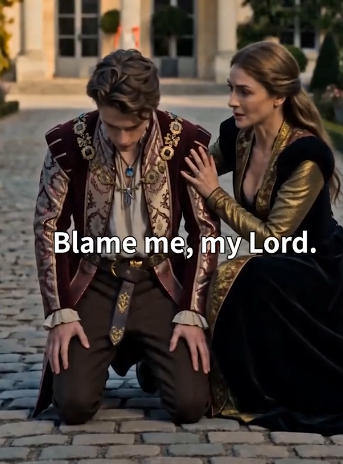
The domestic violence that structures Lucien's life inside the Valewyn household — Garrick's public punishments, Roland's mockery, Morgana's performance of concern — is doing more than backstory work.
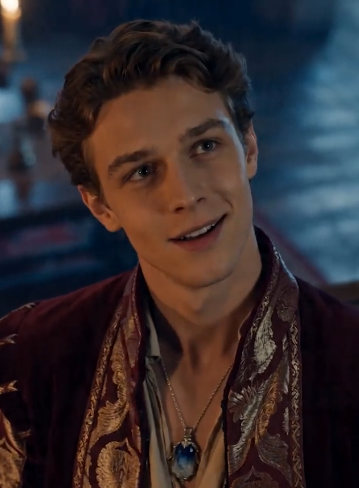
Flashbacks reveal that fifteen years of concealment underlie Lucien's current position, and the series uses that history to make a specific argument: the empire's cruelty isn't exceptional. It's systemic, normalized, performed in front of witnesses who say nothing because the hierarchy sanctions it. Lucien's hidden power is, in this reading, not just personal — it's the drama's answer to a world that decided he was worth nothing and organized itself around that decision.
The satisfaction the series delivers isn't simply watching a bullied man prove everyone wrong. It's watching an entire social order discover that it has been wrong — and that the person it dismissed most completely is also the one best positioned to dismantle everything it built.
Who This Is Actually For
Viewers who burn through fantasy premises looking for genuine dramatic architecture will find more here than the genre typically provides. The series avoids the slow-burn pacing that traditional fantasy dramas rely on, which means the first episode moves fast enough to establish stakes without front-loading exposition. The revenge premise rewards patient watching, but the individual episodes deliver enough momentum that patience doesn't feel like work.
Audience response highlights the Lucien confidence shift as the drama's central highlight, with the production value described as exceeding expectations for short-form content. For viewers new to the format, False Weakling, True Power is a strong entry point precisely because its concealed-power hook is legible from the first scene while its emotional architecture keeps deepening past that initial hook.
The drama knows exactly what it is. The question is whether you've underestimated it — which, given its subject matter, would be entirely fitting.
Where to Watch: False Weakling, True Power is available in full on NetShort. The platform offers free access to episodes, with a NetShort app available for mobile viewing. No confirmed subscription paywall details at time of writing — check the platform directly for current access options.
Related Recommendations