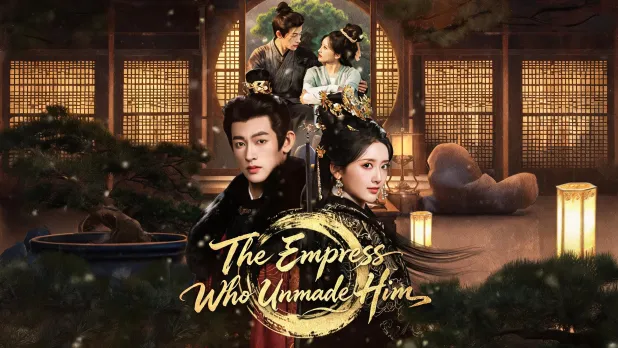
The Empress Who Unmade Him: A Throne Decided by Ambition
The Empress Who Unmade Him is a court drama available on ShortMax, following Eleanor Sterling and Alistair Vance through a power struggle that reshapes an empire. The series covers palace intrigues, an invasion from The Eastern Marches, mythical creatures, and the crises over black gold and a princess that fracture a once-shared alliance. The outcome is declared in the title itself — what the drama builds toward is the question of how it had to end this way, and what the cost of winning actually looks like.
The drama's engine is power: who holds it, who contests it, and what happens when two people standing in the same position decide the space isn't large enough for both of them. Every crisis in the story is ultimately a variation on that single problem. Black gold. A princess. Territorial invasion. Mythical forces. These are not disconnected emergencies. They are pressure applied from every direction until something breaks — and what breaks, in the end, is the alliance between Eleanor and Alistair.
A Kingdom Cracking Under Its Own Weight
The story establishes compound instability from its opening. The crisis over black gold — a resource whose political value is self-evident — runs alongside a crisis involving a princess, a figure whose significance in a court context is almost always tied to dynastic leverage. Neither is a background detail. Together, they construct a court already under serious strain before Eleanor and Alistair's rift becomes the central confrontation.
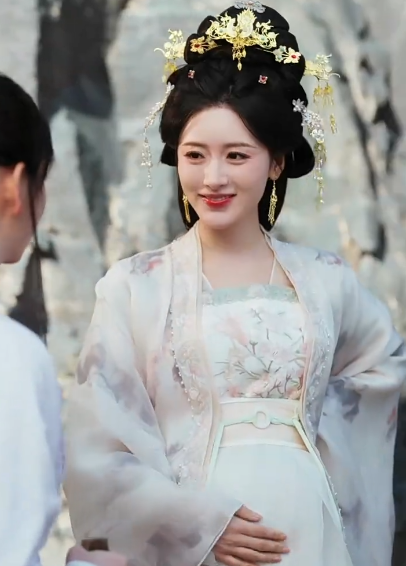
The invasion from The Eastern Marches then introduces an external siege to an already fractured interior. And the mythical creatures that enter the drama's world signal that this story operates on a scale that exceeds conventional palace politics. The forces at work are not purely human. They are embedded in the mythological architecture of the world itself — which means that whoever claims the throne must be capable of navigating something far larger than court intrigue.
What this convergence of crises accomplishes structurally is to force Eleanor Sterling and Alistair Vance into full disclosure. When resources are contested, when borders are breached, when something beyond ordinary reckoning enters the frame, the question of who is fit to lead — and by what means — can no longer be deferred.

Eleanor Sterling: What the Crown Demands and What She Surrenders to Take It
Measured by consequences, Eleanor's arc is one of accumulation. By the drama's close, she holds the imperial title, she has inaugurated the Radiance Era, and she has taken custody of the man who once stood beside her as an equal. That last point is not a footnote. Imprisoning Alistair is the defining act of her reign — it transforms ambition into authority and a rival into evidence of what she overcame.
Eleanor does not reach the throne in spite of the conflict with Alistair. She reaches it through it. The rift over power is not a distraction from her story — it is the central mechanism of her ascent. And the naming of the era she inaugurates carries editorial weight: a Radiance Era implies, by contrast, that what came before was something dimmer. She does not merely win. She reframes the entire period leading up to her rule as a disorder that her coronation corrects.
Alistair Vance: The Mirror That Tells Her What She Must Not Become — And Then Proves She Already Has
Alistair's function in the story is to define Eleanor by opposition. His described quality — ambition — is not a trait that distinguishes him from her. It is the trait they share. The difference the drama draws is not in character but in outcome. Her ambition produces an era. His produces a cell.
This contrast is more useful than a straightforward villain role would be, because it resists a clean moral reading. Eleanor wins by becoming, in some measure, everything Alistair was — only more completely, more strategically, and with better timing. He is not defeated by a superior person so much as outrun by a superior position. The drama frames his imprisonment not as justice but as conclusion: the logical endpoint of a power struggle where someone had to end up contained.
The Element the Drama Introduces Without Fully Resolving
The mythical creatures present in the story are confirmed by the source material but their exact relationship to the political arc remains the drama's most opaque layer. Do they align with one side of the conflict? Are they an independent force that the eventual ruler must absorb or neutralize? The summary establishes their presence within the crisis landscape without specifying their role in Eleanor's ultimate victory.
This ambiguity cuts two ways. It could mean the creatures are primarily spectacular — part of the world's texture rather than its argument. Or it could mean Eleanor's rise to empress requires a kind of mastery that extends beyond human rivals, and that the Radiance Era she ushers in is defined partly by how she handles forces that Alistair, for all his ambition, was not equipped to face. Either reading is available. The drama earns the question even if the summary doesn't answer it outright.
Why the Ending Carries the Weight It Does
Eras are named in retrospect, by the people who survive to remember them. That the drama names Eleanor's era — and names it the Radiance — functions as a deliberate historical stamp. It doesn't simply end the power struggle. It repositions everything that preceded it as a period requiring correction. Eleanor is not just the winner. She is the person after whom time is reorganized.
And imprisoning Alistair rather than removing him entirely is a choice with specific logic. It preserves him as living evidence of what her power replaced while ensuring he cannot contest it further. Control, not elimination. That distinction matters. It's a more complete form of dominance — and a more revealing one about who Eleanor Sterling has become by the time the story ends.
If You Loved The Empress Who Unmade Him, You'll Obsess Over These
Can't Get Enough of You
In Can't Get Enough of You, Carey faces her past when her new CEO boss turns out to be Nolan, the man who cruelly cast her aside years ago. While he feels a strange pull toward her, Carey must protect the secret that she is raising his child alone.

Escape With Boss's Baby
Escape With Boss's Baby tells the story of a hidden heiress living a double life as a secretary to find true love. This captivating romance mini drama explores whether a relationship built on secrets can survive the ultimate reveal. Don't miss this trending short drama!

Shoot My Heart, My Mafia Boss
Shoot My Heart, My Mafia Boss follows the electric clash between a headstrong gangster and a resilient doctor. This romance mini drama blends high-stakes danger with intense passion. Don't miss this trending short drama where secrets and survival lead to an unexpected, fiery connection.

Where to Watch The Empress Who Unmade Him
The Empress Who Unmade Him full episodes are available on ShortMax. If you've been searching for where to watch this series, ShortMax is the platform carrying the complete drama. It suits viewers drawn to court stories where the power struggle is the primary relationship — and where the ending doesn't soften what it takes to be the last person standing.
Related Recommendations



Popular Articles




![[Dubbed Version]Cheating Suspicion: When Truth Emerges](https://v.pinedrama.com/b1265344voduse1318177724/f91122c15145403706111744797/HnohlctDfjEA.webp!15491.webp)