Broken Vows: The Goddess Casts You Down Makes Forgiveness Feel Dangerous
What makes Broken Vows: The Goddess Casts You Down interesting is that it does not treat love as the opposite of violence. It treats love as something that can be weaponized, delayed, rescued, and corrupted, which gives the story a nastier, more persuasive charge than a standard celestial romance.
The fall before the rescue
The official summary does the heavy lifting here: Halie sacrifices everything, even her divine blood, to save the war god Enyalius, only to be betrayed, framed, tortured, and stripped of her unborn child before escaping into the Abyss . That sequence matters because it makes the story’s moral universe immediately unstable. The person who should represent sacred protection becomes the source of destruction, and that reversal is the engine of the whole drama.
This is why the premise feels less like a love story and more like an indictment. Halie’s suffering is not random tragedy; it is the consequence of devotion meeting power without accountability . Once the story establishes that, every later gesture of remorse has to compete with the fact that the harm was deliberate, prolonged, and devastating.
Halie as the wound
Halie’s function in the story is not simply that of a wronged heroine. She is the emotional record of what betrayal costs when the betrayer has divine authority. Her arc, as presented in the summary, is built around endurance so extreme that survival itself becomes a moral position.
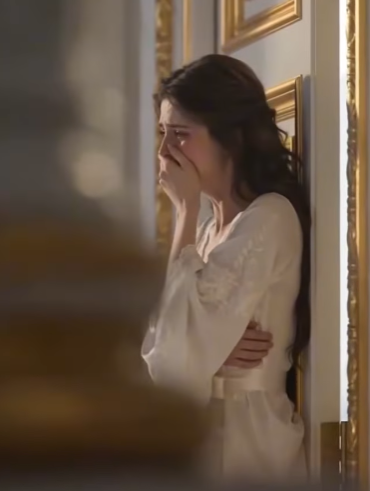
The deepest tension in her character is not whether she can move on. It is whether moving on would mean abandoning the self she had to become in order to live . She has already paid the price of trust, and the story smartly frames her next decision as one of identity rather than romance: does she return to the god who shattered her, or stay with the version of herself that was born in exile?

Enyalius and late remorse
Enyalius is more than the betrayer; he is the drama’s test of whether regret can matter after ruin has already been done. The summary makes clear that he realizes too late that Halie was the only woman he ever loved, and that realization sends him into war across heaven and hell to win her back.
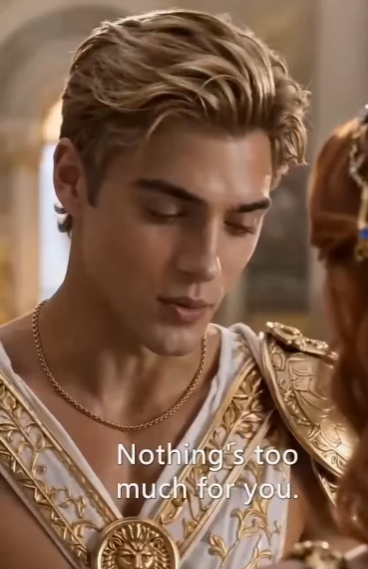
That is a strong dramatic function because it does not let remorse arrive cheaply. His love is not invalidated, but it is morally contaminated by timing. The audience is pushed to ask a hard question: is love still noble when it only becomes visible after possession is lost and the damage is irreversible?
The demon as refuge
The cursed demon works differently. In a story loaded with divine hierarchy, the demon is not just a romantic alternative; he is the narrative’s counter-system. He offers Halie refuge in the Abyss, which means his role is defined less by purity than by shelter.
That makes him compelling because he represents care outside legitimacy. Where Enyalius had power and failed Halie, the demon has curse and proximity, and somehow that makes him safer. The story’s emotional intelligence lies in letting the audience feel that contradiction without overexplaining it: sometimes the place society names as dark is the place where someone finally stops bleeding.
What the story is really asking
Under the mythic surface, the drama is built around one brutal emotional question: is forgiveness a virtue, or a demand placed on the injured so the powerful can feel redeemed? Halie’s choice is not framed as simple indecision. It is a clash between memory and momentum, between the life she was forced to rebuild and the old love that now wants to re-enter it.
That is why the Abyss matters so much. It is not only a setting; it is a psychological counterweight. Heaven in this story appears to be the place where vows are made and broken, while the Abyss becomes the place where truth survives because no one there pretends to be innocent.
Why it should hook viewers
The premise works because it understands escalation. It begins with sacrifice, moves through betrayal and mutilation, then shifts into survival, refuge, and a late-arriving war for redemption . Each stage raises the emotional cost without changing the central issue: can the person who caused the wound ever become worthy of being loved again?
It also benefits from its refusal to make Halie’s healing easy. She is not being asked to choose between two equally appealing suitors; she is being asked to decide whether returning to former love is an act of courage or a surrender of hard-won self-respect. That is the real hook of the series, and it is sharper than the genre usually allows.
Verdict
Broken Vows: The Goddess Casts You Down sounds designed for viewers who want romance with consequences, not just chemistry. Its power comes from the way it turns divine scale into emotional cruelty, then asks whether tenderness can ever survive after power has already abused it.
If you like dark fantasy dramas that treat forgiveness as a battlefield, this one has enough mythic tension and moral bite to stand out. The central conflict is not whether Halie is loved; it is whether love can still mean anything after betrayal has already defined its shape.
Where to Watch
DramaWave — Available on the DramaWave app (iOS and Android). Search Broken Vows: The Goddess Casts You Down within the app. DramaWave offers a selection of free episodes with additional content available through in-app coins or a subscription plan.
Related Recommendations


Popular Articles