The phone on the hotel nightstand buzzed with the relentless precision of a drill sergeant’s whistle. The screen flashed *The General*. It was 0700 hours. William was nothing if not punctual, even in his cruelty.
I let it ring three times before sliding my thumb across the glass. I didn’t say hello. I just listened to the heavy, rhythmic breathing on the other end.
"This charade ends now, Deborah," William’s voice was devoid of warmth, stripped of the charm he reserved for donors and journalists. It was the voice that had commanded battalions, now weaponized against his wife of forty-five years. "I’ve tolerated your little episode for three days. But the gala is tomorrow. The General’s wife does not live in a Holiday Inn."
I stared at the water stain on the ceiling, tracing its jagged outline. "I’m not coming home, William."
"Then you’ll find yourself without resources by noon," he countered, his tone flat, bored. "I’ve already contacted the bank. Joint assets require joint cooperation. If you aren't back in McLean to greet the caterers by tomorrow morning, I’m freezing the accounts. You’ll be a seventy-year-old woman with no credit, no cash, and no home."
He wasn't shouting. He didn't need to. He was simply cutting off the supply lines, a tactic he’d likely taught at West Point.
Panic flared in my gut—the old, conditioned reflex of a woman who had never signed a check without permission. But then I felt the weight of the tote bag at my feet, heavy with the stolen field report and Eddie’s confession. If I fought him in private, he would win. He had the lawyers, the money, and the reputation. He could bury me in legal filings and paint me as senile before the first court date.
I needed a battlefield where his rank couldn't protect him. I needed witnesses.
"Fine," I said, letting my voice tremble just enough to satisfy his ego. "You win, William. I’ll be there for the gala."
"Good," he said, the satisfaction dripping from the syllable. "Wear the beige chiffon. The one we bought for the VFW dinner. It’s dignified."
He hung up without saying goodbye.
I lowered the phone, my hand steady. *Dignified.* That was William’s code for invisible. He wanted me to blend into the wallpaper, a silent prop to hold his arm while he accepted the applause.
I checked my mobile banking app. The accounts were still active. I had a few hours before his threat turned into administrative action.
I didn't go to the department store where the salesgirls knew me as Mrs. General Murray. I took a cab to Georgetown, to a boutique with minimalist window displays and price tags that would make Oliver choke.
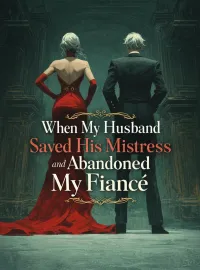
I walked past the racks of sensible navies and muted creams. My hand brushed against silk, velvet, and lace until it stopped on a gown of deep, violent red. It wasn't a happy color. It was the color of arterial blood, of a fresh wound, of the anger that had been fermenting in my marrow for half a century.
"That’s a bold choice," the stylist said, approaching cautiously. She looked at my gray hair, my sensible shoes, and then back at the dress. "Perhaps something in a nice pastel?"
"No," I said, pulling the hanger from the rack. The fabric felt cool and slippery, like retribution. "I’m done with pastels. I want this one."
I spent the rest of the afternoon in a salon chair, watching a stranger emerge in the mirror. The hairdresser dyed my steel-gray hair a rich, defiant chestnut, sweeping it up to expose the sharp line of my jaw—a jawline I hadn't recognized in years. The makeup artist painted my lips a crimson that matched the dress. When I finally stood up, the mouse was gone. The woman staring back looked like she could survive a war.
My final stop was a park bench near the Potomac, where the wind whipped off the water, biting and cold. James Sullivan was waiting, huddled into his trench coat.
"You look different," he said, blinking as I sat down. He didn't just mean the hair.
"I feel different," I replied. I reached into my purse and pulled out the document I had stolen from William’s safe—the carbon copy field report with the handwritten order to prioritize Amelia over Clyde. The smoking gun.
Sullivan took it, his eyes scanning the faded ink. He let out a low whistle. "This is it. This links the timeline to the command decision. It proves he knew exactly what he was doing."
"It proves he murdered Clyde to save his mistress," I corrected.
"I have the story ready to go," Sullivan said, tapping his tablet. "I’ve corroborated the artillery logs. I have a quote from the nurse who treated Eddie Jones. But if we drop this now, William’s PR team will spin it before the ink is dry. They’ll claim forgery, dementia, a disgruntled ex-wife."
"They won't be able to spin it," I said, looking out at the gray water. "Not if the story breaks while he’s standing on stage in front of five hundred people."
Sullivan looked at me, a slow grin spreading across his face. "You’re going to the party."
"I’m giving the toast," I said. "When I step up to the microphone, you hit publish. I want every phone in that ballroom to buzz the moment I say his name."
Sullivan nodded, tucking the document into his coat. "It’s going to be a hell of a birthday, Mrs. Lewis."
"Yes," I said, standing up and smoothing my coat. "It certainly is."