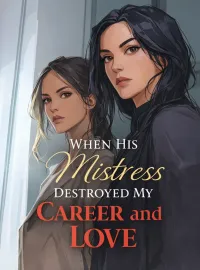
When His Mistress Destroyed My Career and Love Summary
Chapter 1 of When His Mistress Destroyed My Career and Love
I get to the hospital at six forty-five every morning. Not because I have to. Because those fifteen minutes before the day team hands off are mine — quiet, uncontested, just me and the overnight charts and the low hum of the building before it wakes up.
I pulled my white coat off the hook in the locker room and slid my hand into the left pocket. The photograph was there. It always is. My grandmother at the Thanksgiving table, laughing at something off-camera, two years before she died at that same table with her hand pressed to her chest and no one knowing what to do. I was twelve. I still remember the sound the chair made when she fell.
I tucked the photo back and buttoned the coat.
Tonight was Valentine's Day. Reed and I had a reservation at Carmine's — his pick, which meant red sauce and candles and him ordering the veal without looking at the menu. I had been turning something over in my mind for weeks. A decision. Maybe tonight was the right time to finally tell him the truth about who I was. About my father. About all of it.
I hadn't decided yet. I told myself I was still thinking.
I picked up the first chart and started reading.
---
I found him in the attendings' break room at seven-twenty.
I almost walked past the door. I wish I had.
Reed was standing near the window with something in his hands, turning it over slowly, the way you handle something you already know is expensive. A stethoscope. Welch Allyn, the good kind, with a dark chest piece and what looked like gold lettering on the bell. His initials, I realized. Engraved.
Wrenley Henderson was sitting on the counter beside him.
I knew who she was. Everyone in the department knew who she was — Deputy Chief Briggs Henderson's daughter, doing a rotation she hadn't earned through a door her father had opened. She was wearing a silk blouse the color of cream and she had her legs crossed at the ankle, and she was watching Reed turn the stethoscope over in his hands with the expression of someone who already knew how the scene ended.
She looked up and saw me in the doorway.
She smiled.
Reed looked up a half-second later. Something moved across his face — not guilt, exactly. More like a man recalculating.
"Em." He said it easily. "You're in early."
"I'm always in early," I said.
Neither of them moved. The stethoscope caught the light.
I went to get my coffee.
---
I caught him in the stairwell between the third and fourth floors at eight-fifteen, before rounds. It was the only place in the building where you could have a conversation without someone walking through it.
"That was an eight-hundred-dollar stethoscope," I said.
Reed leaned against the railing. He didn't look cornered. He looked patient, which was worse. "She gave it as a professional courtesy. Her father runs placement, Emily. You know how this works."
"I know what I saw."
"Then you saw a colleague giving a gift." He said it the way you explain something to someone who is being deliberately slow. "Don't make this into something it isn't. Be smart about it."
Be smart about it. I turned that over in my mind the way he'd turned the stethoscope.
He reached up and straightened the stethoscope around his neck — the old one, not the new one, not yet — and the gesture was so automatic I don't think he knew he did it. "I'll see you tonight," he said. "Seven o'clock."
He went up the stairs. I stood there for a moment, listening to his footsteps fade.
I tapped my thumb against my index finger. Once. Twice. Three times.
Then I went to work.
---
His text came at six forty-seven PM.
*Something came up. Rain check? Sorry, Em.*
I was already at Carmine's. I had the bread basket and a glass of Chianti and the decision I still hadn't made sitting across from me in the empty chair.
I ate alone. The veal, actually. It was good.
I paid the bill, put on my coat, and took the subway home. The car was mostly empty. I sat near the window and watched the tunnel walls go by and tapped my thumb against my index finger in a slow, steady rhythm, like a metronome keeping time for a song no one was playing.
I did not cry. I was not sure yet what I was feeling. Something quiet and cold, like a room after the heat goes off.
I thought about telling him the truth. About my father, the hospital, all of it. I thought about how I had spent three years making sure he never had a reason to look at me differently. Drugstore moisturizer. The subway. Weekend tutoring gigs for pre-med undergrads who paid me forty dollars an hour in Venmo transfers.
I had given him a version of me I thought he deserved.
I looked at my reflection in the dark window of the train.
I stopped tapping.
---
The next morning, Wrenley found me at my locker.
She was dressed like she was going somewhere better than a hospital. She touched my arm when she spoke — a light, brief contact, fingers on my sleeve — and said, "I hope there are no hard feelings. Reed and I just have so much in common. Professionally."
She smiled the whole time. It was a very good smile.
I looked at her hand on my arm. I looked at her face. I said nothing.
The smile widened slightly, like she'd gotten the answer she came for. Then she left.
I stood at my locker for a moment. The photograph was in my coat pocket. My grandmother, laughing. The chair scraping the floor.
I closed the locker and went to work.
---
That evening, Roman Gomez ran us through a resuscitation case that had come in at four — forty-three-year-old male, no pulse on arrival, bystander CPR for six minutes before the paramedics got there. The kind of case where every second of your decision-making is visible.
He stood at the foot of the bed with his arms crossed and his eyes on me the entire time. When I called for the second round of epi, he said, "Faster. You already knew that thirty seconds ago." When I got the rhythm back, he didn't say anything. He just moved to the next problem.
Afterward, in the hallway outside the trauma bay, he stopped beside me.
"You're better than that," he said. Flat. No softening. "Don't let anything outside this department slow you down."
He walked away before I could answer.
I stood in the hallway under the fluorescent lights and thought about what he hadn't said. Roman Gomez did not give unsolicited advice. He did not waste words on residents he didn't think were worth the breath.
I pulled my coat tighter and went to check on my patient.
The photograph was still in my pocket. It was always there.
Read the Full Novel on












Popular Short Dramas




Popular Articles



![[Dubbed] Why Are All the Sentinels Obsessed With Me: A Sci-Fi Survival Hook](https://v.pinedrama.com/b1265344voduse1318177724/3cdda18c5145403726302001318/GjGdZ7m4ih8A.webp!15491.webp)