I Faked My Death To Ruin My Ex-Husband: When the Powerless Take Back Control
I Faked My Death To Ruin My Ex-Husban, here is the thesis stated plainly: this is a story about the transfer of power, and every plot event is a calculated step in that transfer. The drama is built around one question — what does it take for someone with nothing left to dismantle someone who believed he had everything?
A Highway in Winter, and the Moment That Sets Everything in Motion
On Christmas Eve, in freezing temperatures, Damian abandons Clara and their three-year-old daughter Aurora on a highway. What follows is not simply cruelty — it is an act that crystallizes, in concrete terms, who holds power and who does not. Aurora develops life-threatening pneumonia and suffers permanent brain damage. Damian, confronted with the consequences of his own choice, refuses to help.

This scene functions as the drama's structural thesis. At this moment, Damian possesses every advantage: financial stability, freedom of movement, and the ability to simply leave. Clara has none of these. The cold is not atmospheric detail — it is the physical reality of powerlessness made visible.
What Clara Loses, and What She Finds at the Bottom of It
Clara operates throughout this story as a consequence carrier. She loses nearly everything the drama can take from her: a marriage, her daughter's cognitive health, and finally her own will to survive — she attempts to end her life following Damian's complete abandonment. These losses are not background tragedy. They are the full accounting of what one person's choices cost another.

The reversal arrives when her father intervenes. He had hidden his identity and his considerable wealth, apparently to protect Clara — and his emergence at her lowest point reframes the entire first act. The power Clara appeared to lack had a concealed source all along. Her transformation from abandoned wife to deliberate architect of Damian's downfall does not come from nowhere; it comes directly from this revelation.
Damian's Authority, and Why It Was Always Borrowed
Damian defines the drama's protagonist by pure opposition. He moves through the story's early events with the certainty of someone who believes his position is secure — abandoning Clara, withholding help, walking away from Aurora entirely. The audience registers before he does that nothing holding him up is as stable as he assumes.
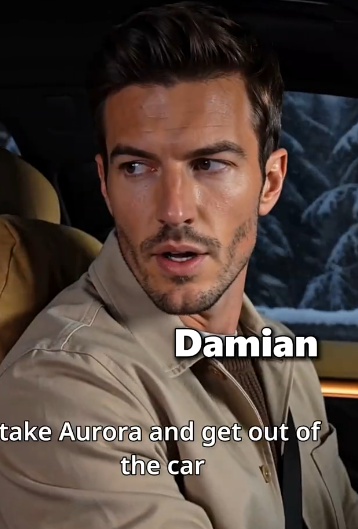
His company falls. His confidence collapses. He is last seen broken by regret, watching the consequences of his own choices arrive in full. Damian is not a layered antagonist; he is the counter-weight that makes Clara's reclamation legible. His fall is proportional to what he once held, and that proportion is the drama's argument.
The Father, the Bionic Decoys, and Why the Revenge Feels Structural
Clara's father carries specific plot weight. The detail that he concealed his identity is not incidental — it means that his resources were present throughout the story's early events, simply hidden. His decision to act, to help Clara fake their deaths using bionic decoys, and to systematically dismantle Damian's company signals something more deliberate than improvised survival.

The use of bionic decoys is one of the drama's more unusual choices, and it works because it raises the stakes of the deception. This is not a quiet disappearance — it is a staged death, designed to create space for destruction. The methodical nature of the company's collapse makes Damian's downfall feel earned rather than convenient. It was built, piece by piece, from the ground up.
Why the Ending Justifies Its Own Premise
Revenge narratives often struggle with their final act. Once the antagonist falls, the story risks running out of purpose. This drama avoids that trap by returning to what it was actually about from the beginning: a mother and a child left in the cold, and whether that wrong can be answered by something beyond punishment.
Clara comes back with a recovered Aurora. That detail reframes the confrontation with Damian from triumph to release. The drama's emotional logic holds because Damian does not collapse because Clara defeats him — he collapses because everything he depended on has already been taken apart. Clara did not need his regret to survive. His regret simply arrives on schedule, as consequence always does.
If You Loved I Faked My Death To Ruin My Ex-Husband, You'll Obsess Over These
After Divorce, I Built A Fabulous Life
After Divorce, I Built A Fabulous Life follows Mia’s journey from a heartbroken housewife to a world-class designer. This captivating romance mini drama explores the high-stakes world of fashion and the emotional twists of a second-chance love. Watch as Mia proves that success is the best answer.

Pieces of a Promise We Never Kept
Pieces of a Promise We Never Kept tells the story of Evan Gage, who abandons his decade-long romance with Carol Stone just weeks before their wedding. Choosing a remote research post over his fiancé, he leaves behind the life he fought to build.

The Reckoning Takes Flight
The Reckoning Takes Flight is a gripping revenge mini drama where a simple flight turns into a battle of wits. When an entitled family pushes Eve too far, a shocking identity reveal ruins a wedding and leads to a total downfall. This popular mini drama is packed with satisfying twists.

Where to Watch I Faked My Death To Ruin My Ex-Husband
I Faked My Death To Ruin My Ex-Husband is available on ShortMax. Full episodes of the drama can be streamed through the ShortMax platform.
Related Recommendations



Popular Articles